Category: Healthy Homes

WELL-informed perspectives on healthier residential environments.

  • We Sealed the Dust Out. What Did We Trap Inside? | Radon and Healthy Homes

    SAMATVAYA / HEALTHY HOMES / INDOOR AIR QUALITY

    We seal our homes against dust and pollution. But what happens to the invisible gas that can enter from the ground beneath them?

    The unintended consequence of sealing our homes

    In Indian cities, controlling dust, traffic emissions and construction pollution has become a major concern for homeowners. Tighter windows, door gaskets and air-conditioned rooms can improve comfort and reduce unwanted outdoor air infiltration. But airtight construction needs deliberate ventilation and pollution-source control. Otherwise, pollutants entering or generated indoors may accumulate.

    One often-overlooked example is radon, a naturally occurring radioactive gas. Airtightness does not itself create radon, and not every sealed home has a radon problem. The risk depends on the ground beneath the building, available entry routes and indoor airflow.

    What is radon, and how can it enter a home?
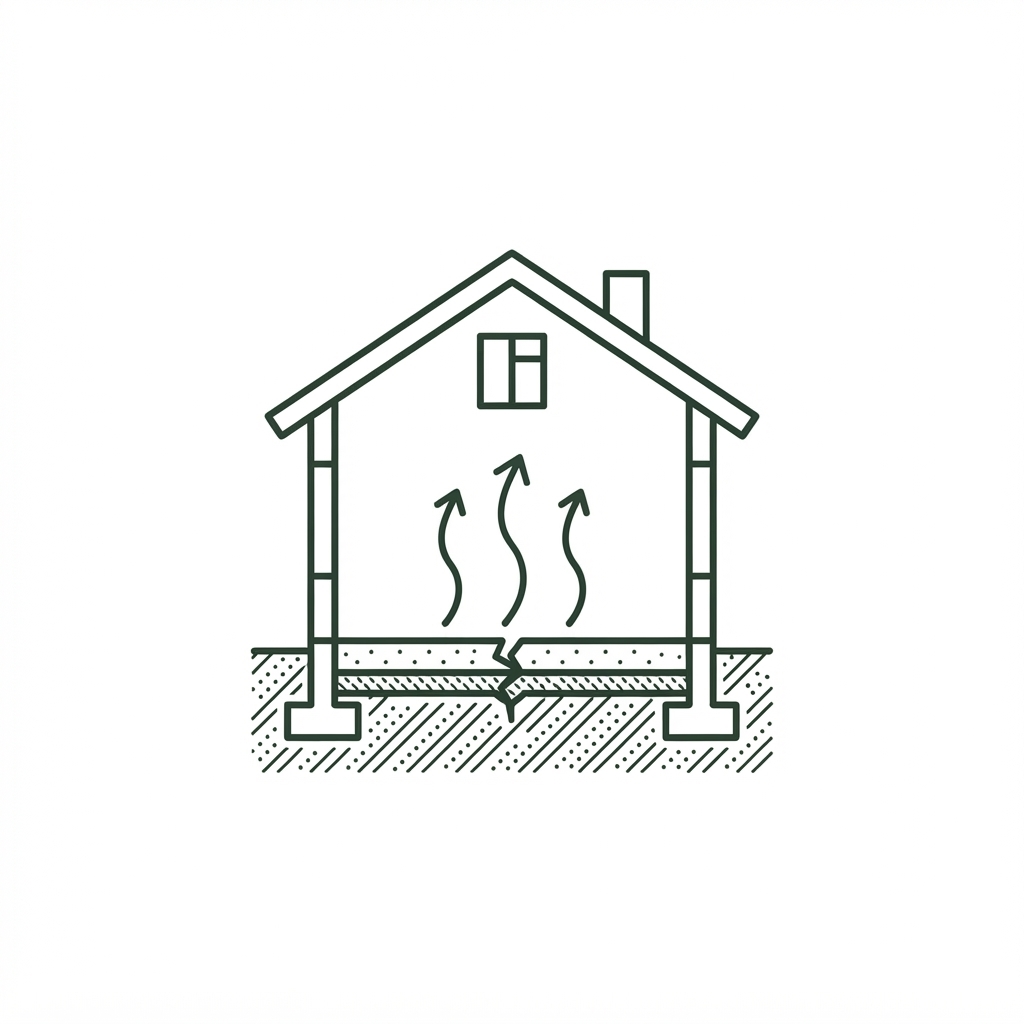
    Radon rising through an opening in a ground-floor foundation

    Radon forms naturally as uranium in soil and rock decays. It has no colour, smell or taste. Soil gases can travel through cracks in slabs, floor-wall junctions, service penetrations, sumps and other openings connected to the ground.

    • Cracks in ground-contact floors and foundations
    • Openings around pipes, cables and drainage connections
    • Gaps at floor-wall joints and unfinished service penetrations
    • Pathways from basements and other ground-contact spaces

    Levels are often higher in basements and lower floors, but upper floors cannot be assumed immune. Local geology and building design matter.

    Why is long-term exposure important?

    The World Health Organization identifies radon as a major cause of lung cancer. Radon’s radioactive decay products can be inhaled and deposited in the airways, where radiation can damage cellular DNA. The established health concern is long-term lung-cancer risk, not an immediate symptom that announces the presence of gas. The risk is especially high in people who smoke.

    What does the evidence say about India?

    Indian researchers have documented indoor radon in multiple regions. A 2021 study across Karimnagar, Peddapalli, Jagtial and Rajanna Sircilla districts in Telangana recorded concentrations ranging from 7 to 457 Bq/m³ in its sampled dwellings. These results are specific to the study area: they do not establish a nationwide increase in radon or imply that every Indian home has elevated exposure.

    An airtight home is not the same as a ventilated home
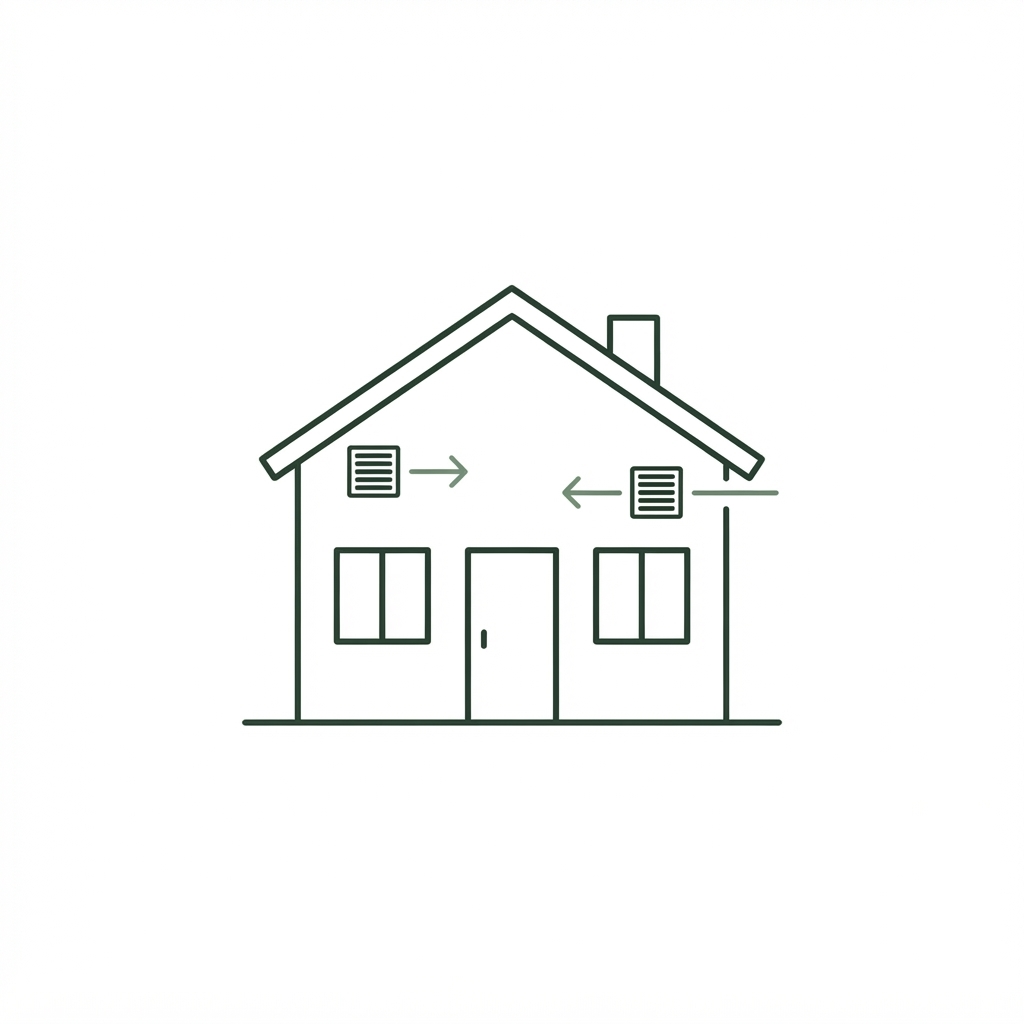
    Balanced fresh-air and exhaust ventilation

    A standard split air-conditioner primarily recirculates indoor air. An ordinary particle air purifier cannot be relied upon to eliminate radon gas. Inadequate air exchange can contribute to buildup when radon is entering a home. Certain exhaust systems may also depressurize a building and increase soil-gas entry unless replacement air and pressure balance are considered.

    The design goal is not to abandon airtightness. It is to protect the home from outdoor pollution while controlling internal sources and providing appropriate fresh air.

    Design solutions: stop the gas before it enters
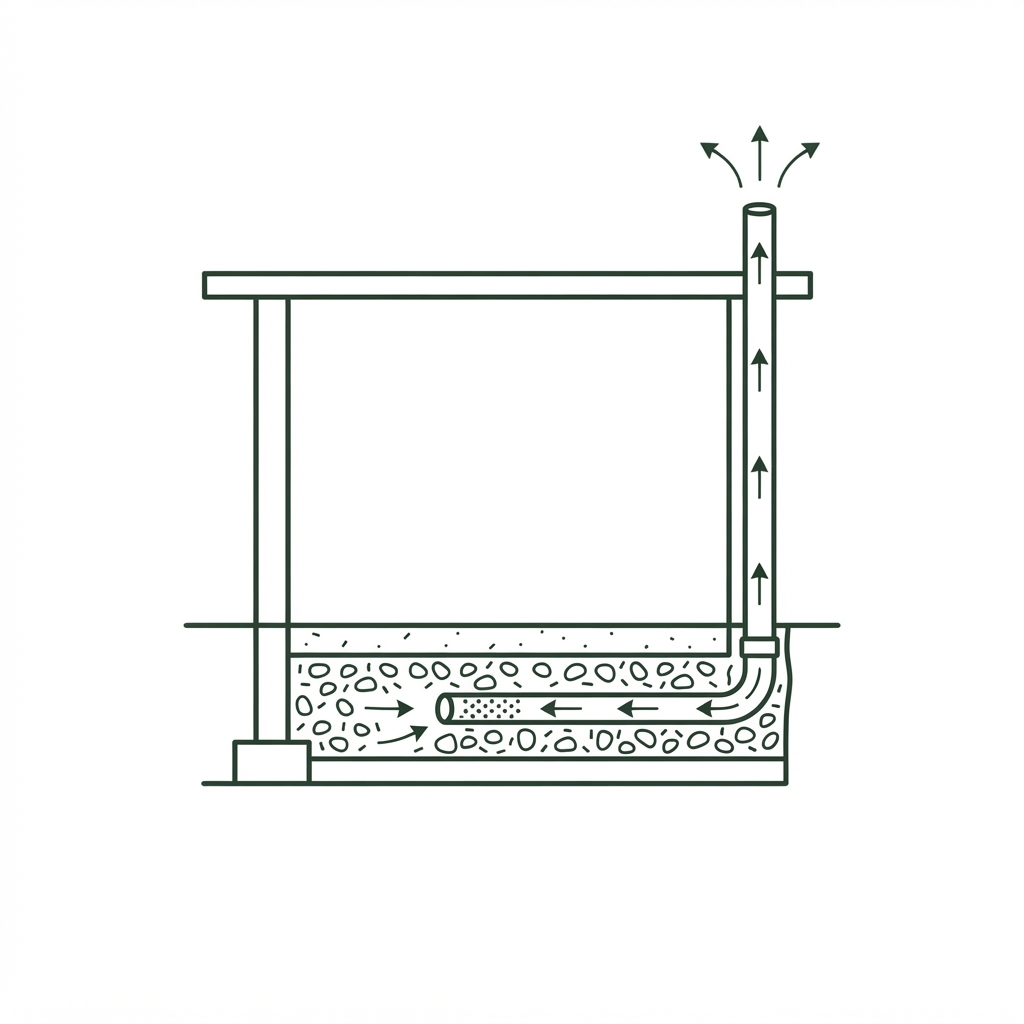
    Sub-slab piping extracting soil gas outside before it enters a home

    1. Plan radon-resistant foundations.

    New construction can incorporate continuous ground-contact barriers, carefully detailed slabs, sealed penetrations and provisions for dedicated sub-floor soil-gas ventilation. Such details are easier to accommodate before finishes are installed.

    2. Intercept soil gas below the slab.

    Sub-slab depressurization uses dedicated suction piping and, when required, a fan to draw soil gas from beneath the floor and discharge it safely outdoors. For many foundation types, this is an established mitigation approach.

    3. Seal entry pathways.

    Appropriate sealing of cracks, joints, service routes and sump openings supports mitigation, but sealing alone should not be presented as a complete solution.

    4. Design controlled ventilation.

    Balanced mechanical fresh-air supply and extraction, with suitable filtration of incoming outdoor air, can support indoor air quality. The effect on radon depends on building conditions; fresh-air ventilation is not an automatic substitute for source-specific mitigation.

    5. Consider pressure balance.

    Kitchen hoods, bathroom extractors and other exhaust systems need adequate make-up air. Poor pressure balance can worsen soil-gas entry in some buildings.

    What about apartments?

    Basements, occupied ground floors and rooms with direct ground contact deserve particular attention. In multistorey buildings, lifts, shafts and service penetrations can also influence air movement. Appropriate solutions depend on the building’s foundation and mechanical systems and may require coordination between the architect, structural engineer, building-services designer and qualified radon-mitigation professional.

    Beyond aesthetics: healthier homes are engineered

    A healthy interior is not defined only by attractive materials, efficient cooling or an air purifier. It also depends on where pollutants originate, how they move and how they leave. Homes can be protected from outdoor dust without ignoring invisible hazards from below.

    We should design for both.

    Beyond Aesthetics — The Science of a Healthier Home.

    Further reading

    Educational article. Building-specific solutions should be designed by appropriately qualified professionals.


  • Why Indoor Air Quality Belongs in Every Interior Design Brief | WELL-Informed Homes

    SAMATVAYA / HEALTHY HOMES / AIR · 01 OF 10

    We select homes for their light, layout and finishes. Yet one of the most consequential design decisions is almost invisible: the air we breathe. A freshly completed interior may look immaculate while its paints, composite wood, adhesives, cleaning products and cooking activities are introducing unwanted substances into the air. That is why indoor air quality belongs in the design brief—not merely in a maintenance checklist.

    The International WELL Building Institute (IWBI) develops and administers the WELL Building Standard. Its Air concept encourages buildings to limit sources of indoor pollution and support an adequate supply of good-quality air. For residential interiors, this means considering product specifications, fresh-air provision, source capture, filtration and ongoing measurement as connected decisions.

    The air indoors is not necessarily cleaner than the air outside

    Single-colour forest-green line clipart illustrating overview

    An enclosed home is a small environmental system. Its air is influenced by outdoor pollution, the activities taking place inside, the materials used in construction and furnishing, moisture, ventilation and the way equipment is maintained. The US Environmental Protection Agency identifies three principal improvement strategies: control pollutant sources, improve ventilation and use suitable filtration or air cleaning. That sequence matters: a purifier cannot make poor material choices or an unventilated kitchen disappear.

    Where WELL changes the way we think about interiors

    The WELL v2 Air concept is not a decorative theme. It connects building design to measurable indoor environmental conditions. Its wider framework also links air quality with Materials, Water and Thermal Comfort: low-emission product choices, moisture prevention and humidity management can influence the same indoor environment. The following are practical applications of this thinking, not a checklist claiming that a home has earned certification.

    1. Material selection begins before installation

    Single-colour forest-green line clipart illustrating materials

    A new cabinet, painted wall or flooring system is a collection of products: substrate boards, laminates, glues, coatings and sealants. Some products release volatile organic compounds (VOCs), including formaldehyde from certain composite wood and adhesive systems. The familiar ‘new interior’ smell is not a reliable measure of safety; some pollutants are odourless, and the absence of smell does not demonstrate low emissions.

    A specification can ask suppliers for relevant third-party emissions test reports, product declarations, formaldehyde emission classification and documentation for the complete system—not only the visible surface. Low-emission products should be selected alongside durability and moisture suitability. Where appropriate, plan installation sequencing and ventilation during curing and handover. Material choices relate particularly to WELL’s Materials concept and the Air concept’s objective of reducing pollutant exposure.

    2. Ventilation is not the same as air-conditioning

    Single-colour forest-green line clipart illustrating ventilation

    A typical wall-mounted split air-conditioner cools and recirculates indoor air; it does not, by itself, guarantee a designed supply of outdoor air. A home needs a coherent plan for fresh air and for extracting air from kitchens, bathrooms and other source areas. Depending on the building, this may include operable windows, mechanical exhaust, dedicated fresh-air provision or an energy-recovery ventilation system. Outdoor pollution, climate, humidity, noise and maintenance requirements should influence the choice.

    WELL Air features address ventilation effectiveness and supply, but the correct design for a Hyderabad apartment will depend on actual occupancy and the building’s constraints. Simply opening a window is not always beneficial during periods of high outdoor particulate pollution.

    3. Capture pollution where it is produced

    Single-colour forest-green line clipart illustrating kitchen

    Cooking can release fine particles, gases and moisture. A properly selected kitchen hood that exhausts outdoors, with sufficient capture and suitable makeup air where required, can address the source before pollutants spread into adjacent rooms. Bathroom exhaust can help remove excess moisture. Indoor smoking and combustion sources need explicit policies or design interventions; fragrant sprays and candles should not be mistaken for air purification.

    4. Filtration is a supplement, not a substitute

    Particulate filtration can help remove dust and fine airborne particles. A HEPA room purifier may be useful in a bedroom or living room when selected for the room’s size and realistic clean-air delivery rate. However, ordinary particulate filters do not necessarily remove gaseous VOCs, and recirculating a room’s air does not replenish oxygen or adequately control every pollutant. Filter replacement and cleaning access must be considered when choosing equipment.

    The role of automation: from invisible problem to useful response

    Single-colour forest-green line clipart illustrating monitor

    This is where well-designed controls can add value. Sensors and a local automation system can help occupants notice changing conditions and operate the right equipment. However, automation is meaningful only when it is connected to actual ventilation or filtration equipment; an attractive dashboard alone does not improve the air.

    • CO₂ sensor: tracks carbon dioxide trends, which can help identify inadequate outdoor-air ventilation relative to occupancy. CO₂ is not a comprehensive air-quality measurement.
    • PM2.5 monitor: helps reveal fine-particle events from outdoor pollution, cooking or indoor activities. Device accuracy and placement matter.
    • Humidity and temperature sensors: help monitor moisture conditions and thermal comfort, with alerts for sustained high humidity.
    • Actuators and controls: a suitable relay, contactor, fan controller or building-system interface can switch or modulate compatible exhaust, fresh-air equipment or an air purifier—subject to electrical and equipment requirements.
    • KNX, Zigbee or other control systems: can integrate sensors, ventilation and user alerts. A KNX installation may link to compatible ventilation actuators or gateways; a Zigbee setup may use a coordinator and appropriate compatible devices.

    Consider a kitchen sensor detecting an increase in particles during cooking. A thoughtfully designed system might prompt the occupant to run the exhaust hood or start compatible filtration, while an occupancy-based ventilation strategy could respond to CO₂ trends elsewhere. Outdoor AQI information may inform window-opening advice, but it does not replace local measurements or professional ventilation design. Automated actions need clear manual overrides, sensible thresholds, safeguards and commissioning.

    A practical homeowner’s checklist

    Before approving an interior specification, ask: What emissions evidence exists for the boards, finishes and adhesives? Where does fresh air enter and polluted air leave? Does the kitchen hood exhaust outdoors? Is the air purifier sized for the actual room? Can filters, sensors and fans be serviced later? Who is responsible for checking that the installed system works? These questions are often more valuable than an additional decorative upgrade.

    Design for performance, not appearances

    WELL-informed interiors recognise that health-related performance is shaped by decisions that may never appear in a portfolio photograph. Material documentation, airflow planning, effective exhaust, appropriate filtration and reliable monitoring are complementary layers. Technology can make their operation easier, but it cannot compensate for poor design.

    Samatvaya’s approach is to connect interior detailing, cabinetry materials, lighting and home automation with the human experience of a space. Clean air, like good lighting or acoustic comfort, deserves to be considered at the drawing and specification stage.

    Further reading

    Editorial note: This article explains design principles for educational purposes. WELL certification requires the applicable standard’s full documentation, testing and verification; reference to WELL here does not represent certification or IWBI endorsement.